Strength in Every Story: The Power of the Stage 4 Community
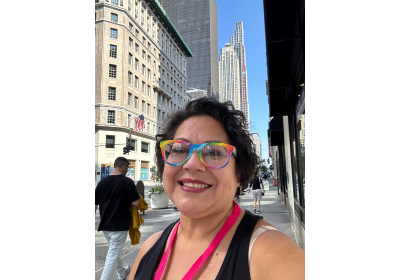
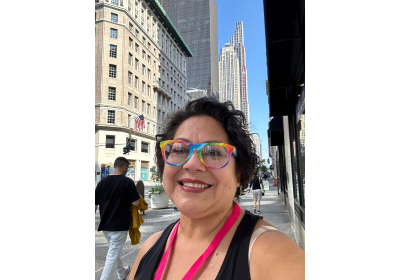
Pink vs. Reality
Every October, the world turns pink. Ribbons appear on coffee cups, football fields, and billboards. Entire campaigns wrap themselves in the language of “awareness.”
But for those of us with metastatic breast cancer (mBC), October is complicated. Pink feels different when you know the cost of what it sometimes represents. We don’t just need awareness. We need support. We need research. We need more time.
This year, instead of watching from the sidelines, I went to New York City to meet others in the Stage 4 community — to share space, stories, and strength in the heart of Times Square.
Meeting with others in Times Square
In September, I joined others in the mBC community from across the country – thrivers, fighters, grievers – for a moment where we could all come together. We met in one of the busiest, brightest places on Earth. Times Square became a space for connection, reflection, and recognition.
I didn’t expect it to break me open. I went to New York thinking I was prepared to meet up with others in the mBC community – prepared to be present, to share space, to stand among others with the same diagnosis that shadows me every day.
But nothing could have prepared me for what it felt like — to stand in the middle of all that noise and light, surrounded by people whose bodies carry stories like mine.
We came together hand in hand, tears streaming down our faces, some of our bodies painted like art – a symbol of strength, resilience, and connection.
Not against each other, not even against the disease in that moment — but for one another and the need to be seen for who we are: for visibility, for community, for the reminder that we are still loving, still here.
In a city that never stops moving, I felt time stand still.
It was bold, raw, and completely unfiltered – no pink gloss to stand behind – sharing who we are, and what it means to be impacted by mBC. There was so much strength in showing up and letting ourselves be seen.
We were standing proudly in the light, saying: “Here we are.”
The Scars Were Out
What struck me most that day was the courage of it all.
The scars were out.
Women stood bare-chested, their mastectomy scars transformed into art — painted with color, glitter, and words of power. Others came with their reconstructed chests or prosthetics.
And then there were people like me whose cancer hides beneath the skin. I still have my hair. I still have my breasts. To the world, I don’t “look sick.” But looks mean nothing when your body is quietly fighting its own battle.
That moment reminded me that mBC doesn’t have one face or one story. It’s a collection of experiences — some visible, some invisible — but all equally real. Every person carries a story that deserves to be heard.
Being Present
At first, I found myself doing what I always do — documenting. Snapping photos. Filming moments. Sharing updates so others could see.
But this was a once-in-a-lifetime experience — one that demanded presence, not proof. So I put my phone down and let myself feel it.
The noise. The energy. The ache.
I looked around and thought about those who couldn’t join us — friends too sick, too weak, or already gone. Every step we took and word exchanged was for them too.
For the first time, I stopped worrying that I didn’t look like I belonged. I realized that showing up, as I am, is enough.
I didn’t need to do anything more than simply be there — present, grounded, alive.
The Emotional Impact
The experience was emotional in ways I didn’t expect.
It was grief, pride, frustration, and hope woven together. There were tears from strangers who instantly felt like family.
Meeting with others who experience the same ticking clock was both heartbreaking and beautiful. There’s an intimacy in that kind of understanding — an unspoken language between those who are still here and those who should be.
This wasn’t just a gathering of people. It was a collective heartbeat. A declaration that we’re still here, still fighting, still worthy of being seen.
And even in the shadow of our mortality, there was strength. Maybe that’s what made it so powerful – it was love, turned outward, for all to see.
Coming Home
It took me several days after returning from New York to process what had really happened- to feel it enough to put words to it.
My daughter and I sat together reading through my early notes when she reminded me of a video I had made right after the gathering. I’d almost forgotten about it. In that video, I talked about how I almost didn’t join the group – unsure if I belonged there, unsure if my voice mattered. And then a familiar friend — with her soft southern voice, kind eyes, and quiet strength turned to me and asked, “Why not?”
I didn’t have a good answer.
So I stepped into the group. And I’m so grateful I did. Because standing with those advocates changed something in me.
When I got home, I realized what I wished I had said out loud that day:
“When you look at me, you don’t see a stage 4 cancer patient.
I have my hair. I have my breasts. I don’t look sick.
But you also wouldn’t know that I have a 30-year-old daughter who is carrying my first grandbabies — twin girls.
You wouldn’t know that the treatment I'm on today wasn’t even available years ago.
Without continued research, funding, and clinical trials, if treatments like mine stop working, people like me will run out of options.
I want to be here.
I want to hold my granddaughters in my arms, watch them take their first steps, hear them say ‘Grandma’ for the first time.
I want to see them grow, to be part of their lives, to tell them one day how I stood in Times Square advocating for the future — their future.”
That’s when it hit me: this gathering wasn’t just about the people who could make it that day. It was about those who couldn’t stand beside us, and the generations we’re standing for.
Those twin girls — still growing inside their mother — are my reminder that hope and urgency can exist in the same heartbeat.
Sometimes it takes coming home to realize just how far you’ve really walked. And sometimes it takes the promise of new life to remind you why you keep walking at all.
Looking Ahead
Next year, I want to be there again.
Not behind a lens. Not half-present. But fully in it.
Because as long as I’m able to, I’ll keep showing up — for myself, for those too sick to stand, and for those who can no longer join us.
Every step forward is a moment of connection. Every conversation shared is a reminder that we’re stronger together — and that awareness must keep leading to action, care, and progress.
We carry their names. We carry their hope. We carry their unfinished stories.
Awareness is not enough, Stage 4 needs more.
And until that changes, we’ll keep showing up — scars out and voices united — for those who can’t.
This blog post was created in paid partnership with Pfizer.